

Please ensure Javascript is enabled for purposes of website accessibility
ANEW Regenerative Medicine Specialists
Man stretching his leg against a railing at sunrise
A Program Built Around Function—not an Isolated Injection.

ANEW Joint Preservation And Restoration System™

Joint pain is rarely caused by one structure acting alone. Arthritis, cartilage change, meniscus injury, ligament instability, tendon disease, muscle weakness, alignment, and movement mechanics can all influence the same joint. ANEW brings these pieces into one physician-led restoration program.

When Temporary Relief Is No Longer Enough

Many patients have already tried medication, cortisone, bracing, a short course of therapy, or an injection that helped for a while. The problem is not always that those treatments were wrong. Often, they were delivered without a complete plan for the joint, the supporting structures, and the muscles that must protect the result.

The ANEW Joint Preservation and Restoration System™ is designed for patients who want a careful assessment of reasonable non-surgical options before assuming that major orthopedic surgery is the only remaining path.

The Joint-Muscle-System Model

A joint is a working system. The cartilage and bone carry load; the menisci, labrum, ligaments, and tendons guide and stabilize movement; and the muscles absorb force and control the joint through daily activity. The hip, spine, foot, gait, body composition, and overall health may also influence how a painful joint performs.

For that reason, ANEW does not treat an MRI finding or sell a biologic procedure in isolation. We identify the structures that are most likely to be driving the problem and build the smallest comprehensive plan likely to improve function.

Conditions the Program May Address

  • Knee osteoarthritis, including selected patients with advanced or bone-on-bone disease
  • Meniscus, ligament, tendon, patellofemoral, and focal cartilage injuries
  • Shoulder arthritis, rotator cuff and biceps conditions, labral problems, and AC joint pain
  • Hip arthritis, labral conditions, gluteal tendinopathy, and greater trochanteric pain
  • Elbow, wrist, hand, foot, and ankle joint or soft-tissue conditions
  • Chronic joint pain after an injury, loss of strength, deconditioning, or incomplete recovery

The Five-Part Restoration System

  1. Evaluate and Diagnose — Review symptoms, goals, examination findings, prior care, and available imaging. Diagnostic musculoskeletal ultrasound may be used when appropriate.
  2. Stabilize the Joint Environment — Address swelling, excessive load, painful movement, bracing needs, and the modifiable factors aggravating the joint.
  3. Restore or Regenerate Selected Structures — Use PRP, prolotherapy, an advanced orthobiologic procedure, or another image-guided treatment only when it matches the diagnosis and candidacy.
  4. Rebuild Muscle and Movement — Restore strength, balance, gait, neuromuscular control, and the functional patterns that protect the joint.
  5. Reassess and Maintain — Measure progress, adjust the plan, and create a long-term strategy for activity, maintenance, or referral.

Not every patient needs an injection.

Some patients are best served by rehabilitation, load management, muscle restoration, and supportive care. Others may benefit from a regenerative procedure combined with those foundations.

Treatment Options Within the Program

The program may include one or more of the following. Treatment is selected because it fits the diagnosis—not because it is newer, more expensive, or more advanced.

  • Physical and functional rehabilitation
  • Bracing, movement modification, and strategies to reduce unnecessary joint load
  • Shockwave or MLS laser therapy for selected tendon, soft-tissue, pain, or recovery needs
  • Muscle restoration, including EMSCULPT NEO® when appropriate, to rebuild joint-protective strength
  • Platelet-rich plasma for selected joint, tendon, ligament, or meniscus conditions
  • Prolotherapy for selected ligament, tendon, or stability-related problems
  • Bone marrow concentrate, microfragmented adipose tissue, intraosseous treatment, or combined orthobiologic strategies for carefully selected patients
  • Coordination with conventional medical care, rheumatology, or orthopedic surgery when another path is more appropriate

A Program, Not a Price Menu

The appropriate level of care depends on the joint, diagnosis, disease severity, previous treatment, overall health, and functional goal. 

After the evaluation, patients receive a clear roadmap explaining what is recommended, what is optional, what is unlikely to help, and how the joint will be reassessed.
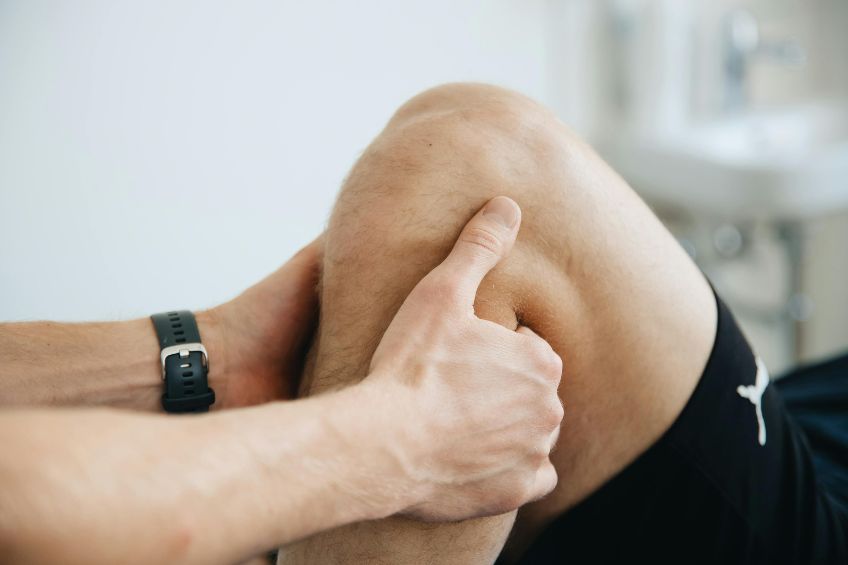
Close-up of a person holding the back of their knee

Who May Be a Candidate?

  • You have arthritis, chronic joint pain, stiffness, swelling, weakness, or reduced mobility
  • You have a meniscus, labral, ligament, tendon, or cartilage injury and want to preserve the joint
  • You have persistent symptoms after medication, bracing, injections, or physical therapy
  • You have been advised to consider surgery and want to understand whether reasonable non-surgical options remain
  • You want to return to walking, exercise, travel, work, recreation, or independent daily activity
  • You are willing to participate in rehabilitation, follow-up, and the work required to support a durable result

When Surgery or Another Specialist May Be the Better Path

Joint preservation is not appropriate for every condition. A recent fracture, infection, major deformity, complete unstable ligament or tendon rupture, displaced osteochondral injury, advanced inflammatory disease, or severe loss of function may require urgent or surgical care. The program is not anti-surgery. It is designed to help patients make a well-informed decision before proceeding.

What to Expect

  1. A focused physician consultation and review of your functional goals
  2. Physical and movement examination of the affected joint and its support system
  3. Review of available X-rays or MRI studies, with additional imaging ordered only when it may change the plan
  4. A candid discussion of conservative, regenerative, and surgical options
  5. A written treatment roadmap with expected sequencing, rehabilitation requirements, reassessment, pricing, and payment options

No predetermined procedure.

The consultation is designed to identify the most appropriate path—not to place every patient into the same regenerative package.

Payment and Financing

Advanced regenerative and functional-restoration services at ANEW are self-pay treatments. Before treatment begins, our team explains the recommended program, what is included, the expected timeline, and the associated cost. Payment and outside financing options may be available, and HSA or FSA funds may be usable when permitted by your plan.

Treatment recommendations are based on medical appropriateness and candidacy—not on financing eligibility.

Physician-Led Joint Preservation

Dr. A. Dianne Obayan is board-certified in Physical Medicine and Rehabilitation, Pain Medicine, and Sports Medicine, with the added distinction of being a licensed physical therapist. Her combined medical and rehabilitation expertise supports a comprehensive, non-surgical approach to knee arthritis and other joint conditions that integrates advanced musculoskeletal evaluation, image-guided procedures, movement and biomechanical assessment, targeted rehabilitation, and functional restoration.

Her approach to knee and joint care extends beyond identifying the painful structure. She evaluates how muscle weakness, impaired movement patterns, joint instability, and loss of mobility may contribute to continued pain and joint deterioration. This allows her to develop a more comprehensive plan focused on protecting the joint, restoring strength and movement, and helping patients remain active while exploring meaningful alternatives to surgery.

Frequently Asked Questions

Is this program only for knees?
No. The knee is ANEW's flagship joint-preservation focus, but the same program principles can be applied to selected shoulder, hip, elbow, wrist, hand, foot, and ankle conditions.
Does everyone receive PRP or an advanced biologic procedure?
No. Some patients do not need a regenerative procedure, and some are not appropriate candidates. Treatment is selected after the diagnosis and expected value are reviewed.
Can the program guarantee that I will avoid surgery?
No. The goal is to identify reasonable joint-preserving options and improve function when possible. Some patients will still require surgery, and we will say so when that is the more appropriate path.
Why is muscle restoration part of a joint program?
Muscles absorb force, stabilize the joint, and control movement. A procedure cannot provide its full value if weakness and poor mechanics continue to overload the area.
How long does the program take?
It varies by diagnosis and treatment. Some plans focus on several weeks of rehabilitation and supportive care; regenerative procedures may require a longer, gradual recovery and reassessment process.
Is the program covered by insurance?
ANEW's advanced regenerative and functional-restoration services are generally self-pay. Coverage for imaging, conservative care, or other medical services depends on the provider, location, and insurance plan.

Medical Disclaimer

This page is for general education and does not replace an individualized medical evaluation. Results vary, and no treatment can guarantee pain relief, tissue regeneration, improved function, avoidance of surgery, or a specific recovery timeline. Some advanced regenerative therapies are not FDA-approved to treat orthopedic conditions; candidacy, evidence, alternatives, and limitations are reviewed before treatment.

You Don't Have To Live With Pain.

Let's build your path to recovery - together.

ANEW Regenerative Medicine Specialists

Contact

menuchevron-down