
SoftWave and MLS laser therapy are used at ANEW as supportive treatments within a larger restoration plan. They may help calm a painful region, improve treatment tolerance, support selected tissue-recovery goals, and prepare a patient for progressive rehabilitation or a regenerative procedure.
The term shockwave is often used for several different technologies. Some systems create radial pressure waves from a pneumatic projectile. Others focus energy at a narrow point. ANEW uses SoftWave, a broad-focused electrohydraulic system with a different wave-generation and distribution pattern.
SoftWave uses an electrohydraulic spark source and a parabolic reflector to produce broad, parallel acoustic shockwaves over a wider tissue zone. This broader distribution allows the clinician to cover superficial and deeper tissues without concentrating all of the energy at one small focal point.
A broader treatment zone can be more tolerable.
SoftWave distributes energy over a wider area rather than one narrow focal point. This is designed for greater patient comfort and may feel less sharply painful than some focused or radial approaches. Injured tissue can still be sensitive, and intensity is adjusted to patient feedback.
The acoustic wave creates a mechanical stimulus within tissue. This process, often called mechanotransduction, can influence local circulation, pain signaling, cellular activity, and the biological response to tissue stress.
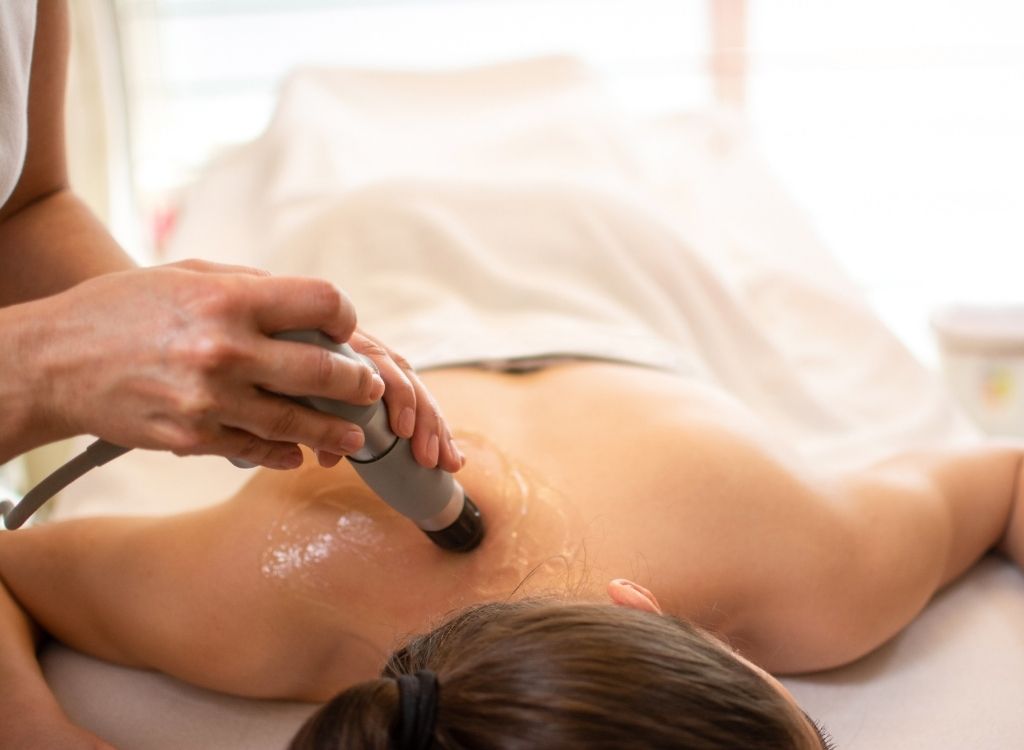
SoftWave is non-invasive: no needle or incision is used. Gel is placed on the skin, and the applicator is moved across the treatment region while the patient reports areas of sensitivity. That feedback can help the clinician map the symptomatic tissue and adjust the treatment.
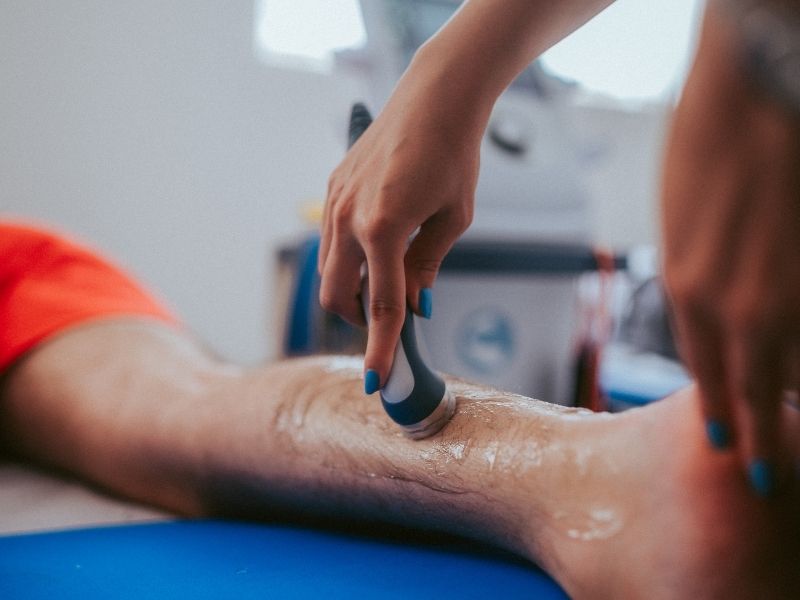

Pneumatic pressure wave; energy is strongest near the applicator and disperses with depth.

True shockwave energy converges toward a defined focal zone.
True electrohydraulic shockwaves are reflected in a broad, parallel pattern across a wider treatment volume.
Evidence for extracorporeal shockwave therapy varies by condition and technology. SoftWave should not be described as a stand-alone cure, a universal cartilage-regrowth treatment, or a replacement for repair of a complete rupture.
MLS laser therapy is a form of photobiomodulation. It delivers synchronized continuous 808 nm and pulsed 905 nm light emissions to a selected treatment region without cutting or ablating tissue.
The purpose is to influence cellular and tissue responses associated with pain, inflammation, edema, and recovery. Treatment is non-invasive. Patients may feel little sensation or mild warmth, depending on the area and device settings.
The technologies act through different forms of physical energy. SoftWave provides a mechanical acoustic stimulus, while MLS uses synchronized light energy. They may be combined when the physician believes the different mechanisms can support the same functional goal.
Combination does not mean every patient needs both treatments or that the effect is guaranteed to be greater. The plan is individualized and reassessed rather than delivered as an automatic package.
SoftWave treatment may reproduce the familiar tenderness of the injured tissue, but the broader wave pattern and adjustable dosing are intended to support tolerability. MLS laser is generally comfortable. Temporary soreness, redness, or symptom fluctuation can occur.

Both treatments are commonly used as a series because tissue response and functional recovery develop over time. The number and frequency depend on the diagnosis, severity, response, and whether the therapy is being used alone or around rehabilitation or a procedure.
ANEW establishes baseline pain and function, checks progress during the series, and performs a final reassessment. Lack of meaningful progress should trigger a review of the diagnosis and treatment plan rather than endless passive treatment.
Contraindications and precautions vary by technology and treatment site. Pregnancy, active infection, tumor in the treatment area, certain bleeding or vascular conditions, impaired sensation, implanted devices, photosensitivity, and other medical factors may affect candidacy.
SoftWave and MLS laser services at ANEW are offered as self-pay care and may be recommended individually or as part of a broader program. Before treatment, our team explains the proposed series, reassessment points, what is included, and the associated cost.
Treatment recommendations are based on medical appropriateness and response - not on package availability.
At ANEW, SoftWave Therapy and MLS Laser Therapy are not offered as isolated technologies or machines in search of a diagnosis. Dr. Obayan and the clinical team carefully determine how each treatment may fit within a broader plan that can include pain management, rehabilitation, muscle restoration, joint preservation, and functional recovery. Every recommendation is guided by the patient’s diagnosis, clinical findings, and personal goals.
This page is for general education and does not replace an individualized medical evaluation. Results vary, and SoftWave or MLS laser therapy cannot guarantee pain relief, tissue regeneration, improved circulation, return to activity, or avoidance of surgery. Candidacy, contraindications, alternatives, treatment parameters, and expected limitations are reviewed before treatment.
Let's build your path to recovery - together.

Advanced regenerative care for lasting results.
ANEW Regenerative Medicine Specialists
28544 Orchard Lake Rd,
Farmington Hills, MI 48334
Tel: 248-861-2639
Email: care@anewregen.com