

Hearing that your knee is "bone-on-bone" can be discouraging. It often sounds as though knee replacement is the only path left. For some people, surgery is the right next step. But for others, a thoughtful, physician-led joint-preservation plan may still improve pain, strength, mobility, and quality of life. At ANEW, we evaluate the whole knee—and the whole person—before deciding what should come next.
Many patients arrive after months or years of increasing pain, stiffness, swelling, and loss of confidence in the knee. They may already have tried anti-inflammatory medications, cortisone injections, hyaluronic acid, braces, physical therapy, or simply avoiding the activities they used to enjoy. Some have been told that the X-ray shows severe arthritis and that knee replacement is inevitable.
That may be true for some knees. But the phrase "bone-on-bone" does not, by itself, tell us how you function, how much strength remains, how stable the joint is, whether surrounding tissues are treatable, or whether a structured non-surgical program could still help. The purpose of this evaluation is not to give false hope. It is to define what is realistically possible before you commit to the next major step.
"Bone-on-bone" is a common way of describing advanced osteoarthritis. It usually means the cushioning cartilage within part of the knee has worn down enough that the space between the bones appears greatly narrowed or absent on X-ray. The joint may also show bone spurs, thickening beneath the cartilage, changes in the joint lining, cystic change, and remodeling of the bone.
This term is useful because it signals severity. But it is not a complete diagnosis. Two patients can have similarly severe X-rays and function very differently. One may still walk well and stay active; the other may have severe pain with every step. Imaging matters, but it is only one part of the decision-making process.
The amount of pain a patient feels does not always match the severity of the imaging. Some people with severe arthritis maintain reasonable function for years, while others struggle earlier because of inflammation, weakness, instability, poor mechanics, or stress on other structures such as the meniscus, bone, tendons, or kneecap.
That is why we do not recommend treatment based on the X-ray alone. We want to understand how the knee behaves in real life—how it tolerates walking, stairs, standing, sleeping, and the activities you want to return to.
Related knee pages
Knee Pain and Arthritis | Meniscus Tears | Knee Ligament, Tendon and Cartilage Injuries
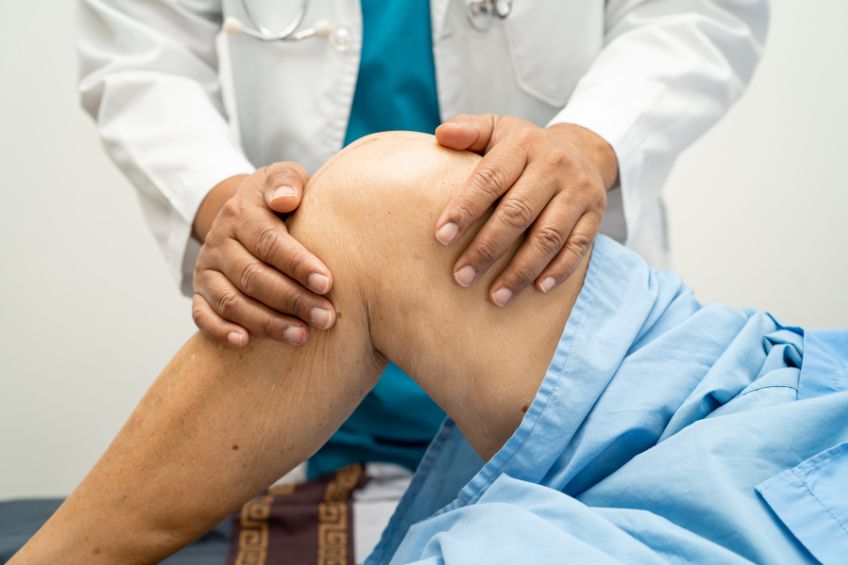
Even with advanced arthritis, the knee is not just an X-ray. The joint surfaces matter, but so do the supporting structures around the joint and the larger movement system above and below it. When arthritis progresses, the surrounding muscles often weaken, motion becomes restricted, and walking patterns change. These changes can increase stress on the knee and make the pain feel worse.
ANEW's Joint–Muscle–System approach looks at three connected levels:
This is why advanced arthritis care should not be reduced to either "just keep injecting it" or "go straight to replacement." The right plan depends on whether function can still be meaningfully improved and whether joint-preservation care still offers reasonable value.
Before recommending treatment, we want to understand both the severity of the joint and the capacity that remains around it.
When a procedure is recommended, image guidance is used when appropriate to improve accuracy and place treatment in the intended structure.

Clarify the severity, define the major pain generators, and determine whether a meaningful non-surgical pathway remains.

Improve the environment around the joint with rehabilitation, muscle restoration, load management, and supportive therapies.

Use a carefully selected orthobiologic strategy when appropriate, or proceed to surgical consultation when that is the better path.
Some patients with severe arthritis still benefit from a structured plan that focuses on improving the environment around the knee even before an injection is considered. This may include targeted rehabilitation, bracing, activity and load modification, Shockwave therapy, MLS laser therapy, muscle-restoration treatment, and strategies to improve stability and confidence.
This pathway is particularly important when weakness, gait changes, balance deficits, or deconditioning are major contributors to the disability.
Platelet-rich plasma may be considered for selected patients with advanced arthritis as part of a broader physician-led plan. PRP is prepared from your own blood and contains a concentrated portion of platelets and signaling proteins. It may help some patients improve pain and function, but its effect in advanced osteoarthritis is less predictable than in earlier-stage disease.
PRP should not be presented as a treatment that recreates lost cartilage or returns a severely arthritic knee to normal. It is best considered as one possible component of a broader restoration strategy.
For carefully selected patients, advanced autologous orthobiologic approaches may be discussed. Depending on the knee and the overall picture, this can include bone marrow aspirate concentrate, microfragmented adipose tissue, intraosseous procedures, or a combined strategy. These approaches are reserved for patients in whom the expected benefit justifies the complexity and cost.
These procedures do not guarantee avoidance of knee replacement and do not recreate a normal joint. The recommendation depends on candidacy, severity, alignment, range of motion, stability, health, goals, and the realistic chance of improving function.
Advanced arthritis often causes patients to reduce activity, which leads to additional muscle loss. As strength declines, the knee becomes less protected during walking, stairs, and transfers. The result is a cycle: pain leads to inactivity, inactivity leads to weakness, and weakness increases stress on the knee.
That is why ANEW places major emphasis on rebuilding the muscles that support the joint. Depending on your situation, this may include progressive rehabilitation, neuromuscular retraining, and muscle-restoration technologies such as EMSCULPT NEO® as part of a broader function-based plan.
There are times when a knee replacement evaluation is the most appropriate next step. This may be the case when pain and disability remain severe despite reasonable non-surgical care, range of motion is profoundly limited, deformity is significant, the joint is unstable, or the likelihood of meaningful benefit from a preservation program appears low.
Our philosophy is not anti-surgery. It is pro-clarity. If a joint-preservation plan is reasonable, we will explain it honestly. If knee replacement offers the better likelihood of meaningful improvement, we will tell you that too.
A realistic goal matters.
The aim of a bone-on-bone preservation program is not to promise a brand-new knee. It is to determine whether meaningful improvements in pain, strength, mobility, and quality of life are still achievable without immediate surgery.
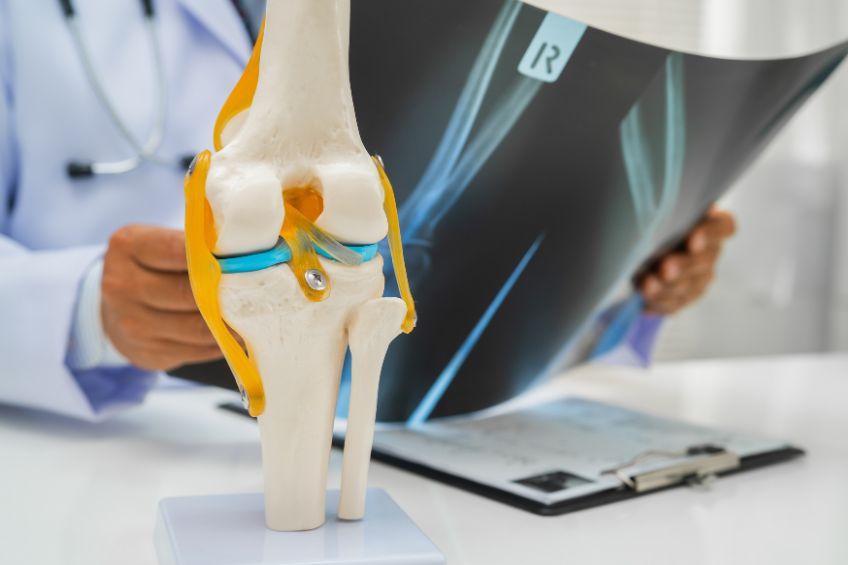
Urgent, surgical, or other specialist evaluation may be more appropriate for a recent fracture, suspected infection, a hot and acutely swollen joint, major instability, rapidly progressive deformity, a persistently locked knee, or symptoms suggesting inflammatory or systemic disease. When another pathway is more appropriate, we will say so directly.
No pressure. No one-size-fits-all recommendation.
Some patients leave with a restoration plan. Others leave with the reassurance that surgery is the more appropriate choice. The goal is to help you make the right decision for your knee.
Advanced regenerative and functional-restoration services at ANEW are self-pay treatments. Before treatment begins, our team will explain the recommended program, what is included, the expected timeline, and the associated cost. Payment and outside financing options may be available, and HSA or FSA funds may be usable when permitted by your plan.
Treatment recommendations are based on medical appropriateness and candidacy—not on financing eligibility. You will have the information needed to understand both the clinical and financial aspects of care before making a decision.
Dr. A. Dianne Obayan is uniquely trained as both a board-certified physician and a licensed physical therapist. She is board-certified in Physical Medicine and Rehabilitation, Pain Medicine, and Sports Medicine, giving her an exceptional understanding of how the joints, muscles, and nervous system work together. This combined expertise allows her to evaluate knee arthritis from both a medical and functional perspective and develop comprehensive, non-surgical treatment plans designed to relieve pain, restore movement, strengthen the supporting muscles, and help patients preserve their natural joints.
That combination is especially valuable in advanced knee arthritis, where the right decision may range from targeted rehabilitation to a carefully selected orthobiologic procedure—or to an honest recommendation for knee replacement. The goal is not to sell a procedure. It is to determine the most appropriate path for the patient in front of us.
This page is for general education and does not replace an individualized medical evaluation. Results vary, and no treatment can guarantee pain relief, cartilage regeneration, avoidance of surgery, or a specific recovery timeline. Some advanced orthobiologic procedures are not FDA-approved to treat knee osteoarthritis; candidacy, evidence, alternatives, and limitations are reviewed before treatment.
Let's build your path to recovery - together.

Advanced regenerative care for lasting results.
ANEW Regenerative Medicine Specialists
28544 Orchard Lake Rd,
Farmington Hills, MI 48334
Tel: 248-861-2639
Email: care@anewregen.com