

Ligament laxity, tendon attachment pain, joint irritation, and selected spine-related conditions may require a more targeted approach than a general injection into the painful region. ANEW combines careful diagnosis with ultrasound or fluoroscopic guidance so the treatment reaches the intended structure.
Prolotherapy is an injection treatment most commonly using a concentrated dextrose solution at a painful or weakened ligament, tendon attachment, joint capsule, or selected joint. The solution is intended to create a controlled local healing stimulus and support the body's repair response.
It is not a corticosteroid injection, and it is not PRP. Prolotherapy uses a simple solution rather than a concentrated blood product. Its role depends on the tissue, degree of injury, mechanical stability, and the available evidence.
Prolotherapy cannot reconnect a complete rupture.
A fully torn tendon, mechanically unstable complete ligament tear, displaced fracture, or another repairable surgical lesion should not be treated as though a series of injections can restore normal anatomy.
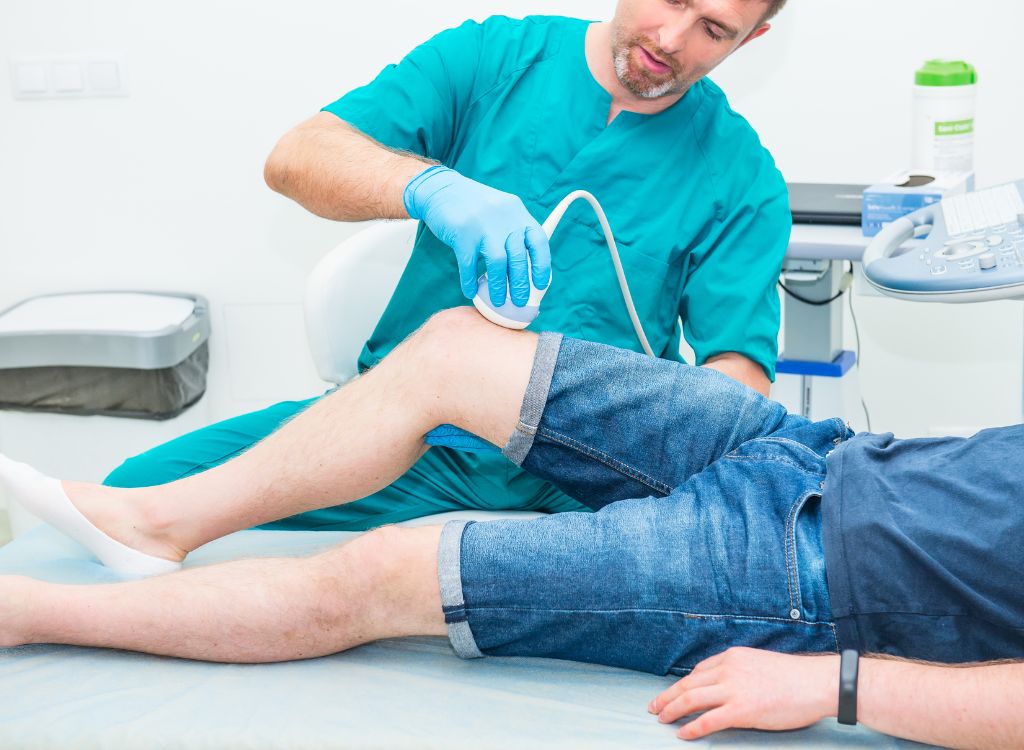

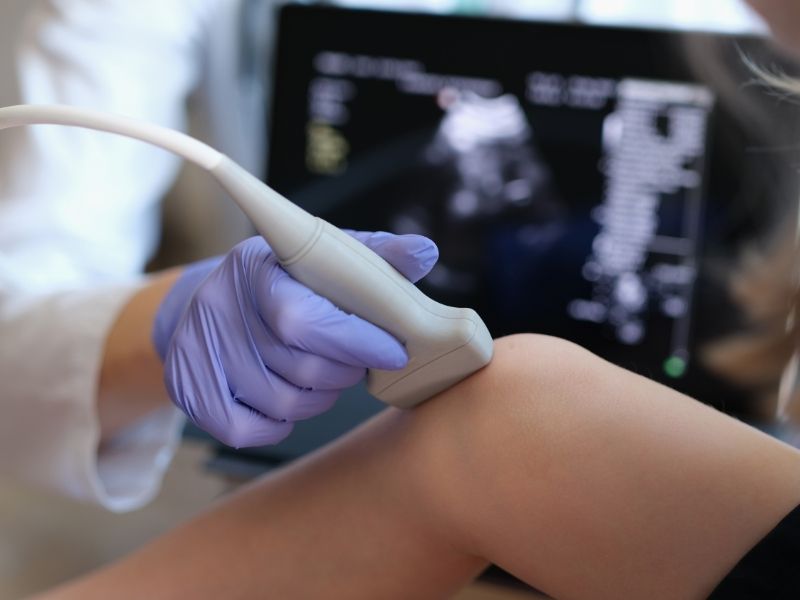
Provides real-time imaging of many joints, tendons, ligaments, bursae, nerves, vessels, and soft tissues without radiation.

Uses live X-ray imaging and contrast when appropriate for selected deep joints and spinal targets.
A precisely placed anesthetic or treatment injection may help test whether the suspected structure matches the patient's symptoms.
The exact procedure depends on the diagnosis.
Each medication or biologic has a different purpose. A corticosteroid, local anesthetic, dextrose solution, PRP preparation, or hydrodissection fluid should not be presented as interchangeable.
The skin and deeper tissues may be numbed depending on the target and treatment. Pressure, stinging, or aching can occur during the procedure. Prolotherapy often causes temporary post-procedure soreness because the treatment is intended to create a controlled local response.
Most procedures are outpatient. The degree of activity modification depends on the tissue, the solution used, and whether the injection was diagnostic, anti-inflammatory, regenerative, or part of a series.
Soreness may last several days, and improvement is not expected immediately. When prolotherapy is used, treatment may be staged as a series with reassessment between sessions rather than delivered indefinitely on a fixed schedule.
Rehabilitation remains important. The treated ligament, tendon, joint, or nerve must be progressively loaded and integrated into normal movement if the goal is improved function rather than temporary symptom change.
Research on dextrose prolotherapy is promising for selected tendinopathies and some musculoskeletal pain conditions, but studies vary in diagnosis, injection technique, comparison treatment, and follow-up. It should be described as an additional component of conservative care, not as a proven universal repair method.
Image guidance improves confidence in placement and can improve procedural accuracy for many targets. It does not guarantee that the selected treatment will work or that surgery can be avoided.
Prolotherapy, selected precision injections, and related functional-restoration services at ANEW are generally self-pay. Before treatment, our team explains the recommended procedure or series, what is included, the expected timeline, and the associated cost.
Treatment recommendations are based on medical appropriateness and candidacy - not on financing eligibility.
Dr. A. Dianne Obayan is board-certified in Physical Medicine and Rehabilitation, Pain Medicine, and Sports Medicine, with the added distinction of being a licensed physical therapist. Her expertise supports both the precise, image-guided placement of each injection and the rehabilitation strategy that follows. This integrated approach helps address not only the painful structure, but also the weakness, instability, impaired movement, and functional limitations that may contribute to persistent symptoms.
This page is for general education and does not replace an individualized medical evaluation. Results vary, and prolotherapy or another image-guided injection cannot guarantee tissue repair, pain relief, return to activity, avoidance of surgery, or a specific recovery timeline. Candidacy, evidence, medication considerations, alternatives, and risks are reviewed before treatment.
Let's build your path to recovery - together.

Advanced regenerative care for lasting results.
ANEW Regenerative Medicine Specialists
28544 Orchard Lake Rd,
Farmington Hills, MI 48334
Tel: 248-861-2639
Email: care@anewregen.com