
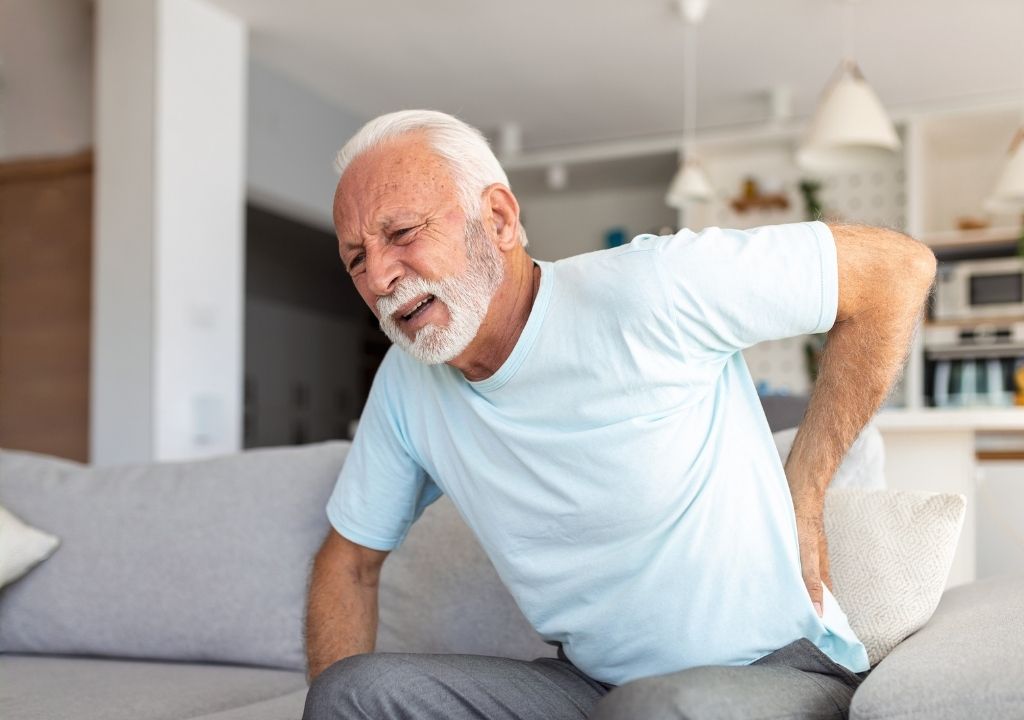
A physician-led, non-surgical approach to chronic and recurring low back pain. We find where the pain is coming from, then rebuild the strength and movement that support your spine.
Back pain can make ordinary life feel difficult. Sitting too long, standing in line, walking through a store, getting out of bed, driving, exercising, or simply bending to pick something up can become a calculated decision.
Many patients are told their pain is just arthritis, a disc problem, aging, or muscle strain. Others are offered medication, repeated injections, or surgery without a clear explanation of where the pain is actually coming from.
At ANEW Regenerative Medicine Specialists, we take a physician-led, non-surgical approach to back pain. Our goal is to understand the source of your symptoms, how your back pain is affecting your movement, and what can be done to help you function with more confidence.
Low back pain may involve muscles, ligaments, discs, facet joints, sacroiliac joints, nerves, posture, gait, hip mechanics, weakness, or compensation from another painful joint. That is why ANEW does not treat back pain with a one-size-fits-all protocol.
A careful evaluation helps determine whether the pain appears primarily mechanical, joint-related, nerve-related, soft-tissue related, or part of a broader movement problem.
Our process begins with a detailed history, physical examination, review of imaging when available, and assessment of movement, strength, posture, and functional limitations. We want to understand not only what hurts, but why it continues to hurt.
Your plan may include physical therapy, strength restoration, movement retraining, activity modification, laser therapy, SoftWave therapy, image-guided injections, prolotherapy, PRP, or other non-surgical options when appropriate. The treatment pathway depends on your diagnosis, candidacy, goals, and response to care.

Temporary pain relief can be helpful, but the larger goal is to help you move better. For many patients, that means improving trunk strength, hip control, flexibility, walking tolerance, balance, and confidence with daily activity.
At ANEW, back pain care fits into the larger restoration model: Review the source of pain. Rebuild the supporting system. Regenerate or support injured tissues when appropriate. Reassess progress over time.
Some symptoms should not wait for a routine consultation. Seek urgent medical attention for new bowel or bladder loss, saddle numbness, rapidly worsening leg weakness, fever with severe back pain, major trauma, or severe unexplained pain.
You may have more options than you think. Schedule a physician-led back pain consultation to understand what is driving your pain and whether a non-surgical restoration plan is right for you.
Herniated Disc And Sciatica | Spinal Arthritis, Stenosis And Sacroiliac Joint Pain
Let's build your path to recovery - together.

Advanced regenerative care for lasting results.
ANEW Regenerative Medicine Specialists
28544 Orchard Lake Rd,
Farmington Hills, MI 48334
Tel: 248-861-2639
Email: care@anewregen.com