
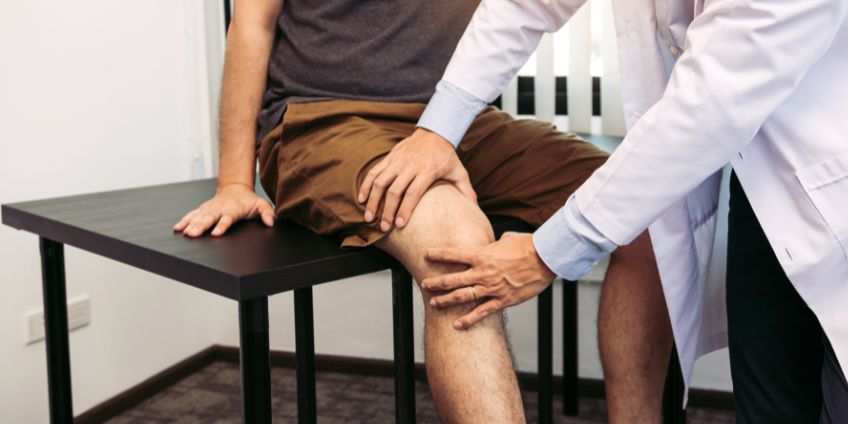
There are far more options between “take ibuprofen and live with it” and “get a knee replacement” than most patients are told about. The treatment spectrum for knee osteoarthritis includes exercise and strength training, weight management, physical therapy, bracing, activity modification, anti-inflammatory medications, several types of injections with different mechanisms of action, and regenerative procedures that work with the body’s own biology to reduce pain, improve function, and support the joint environment. The right combination depends on what is actually causing your pain, how advanced the structural damage is, what your functional goals are, and what has or has not worked for you in the past. For many patients, a well-matched non-surgical strategy can produce meaningful, lasting improvement—and in some cases delay or eliminate the need for joint replacement altogether.
Non-surgical treatment for knee osteoarthritis is not a single intervention—it is a layered strategy that addresses the mechanical, inflammatory, and biological factors driving the problem. The foundation for every patient is muscle strengthening (especially the quadriceps and hip stabilizers), appropriate exercise, and weight management where relevant. Beyond that foundation, treatment options include physical therapy, topical and oral anti-inflammatory medications, cortisone injections for short-term flare management, hyaluronic acid (viscosupplementation) injections, platelet-rich plasma (PRP), bone marrow concentrate, and when applicable, adjunctive treatments like shockwave therapy and bracing. No single injection or procedure works for everyone, and the effectiveness of any treatment depends heavily on matching it to the correct diagnosis, disease stage, and patient. A comprehensive evaluation that identifies the specific pain generator—not just the presence of “arthritis” on imaging—is what separates a precise treatment plan from a generic one.
Joint replacement is an effective and appropriate intervention for advanced osteoarthritis, and for many patients it is the right decision at the right time. But it is a major surgical procedure with a significant recovery period, real surgical risks, a finite lifespan for the implant (typically 15 to 20 years), and the possibility that a second revision surgery may eventually be needed. For patients whose OA is not yet severe enough to warrant replacement, for patients who are younger and want to preserve the joint as long as possible, for patients who cannot undergo surgery due to medical comorbidities, and for patients who simply want to explore what is possible before committing to an irreversible procedure, non-surgical options are not a consolation prize—they are a legitimate and often effective path forward.
The challenge is that most patients are not presented with the full range of options available. The conventional pathway tends to follow a narrow sequence: over-the-counter pain medication, then physical therapy, then cortisone injections, and then—once those stop working—surgery. That sequence leaves out a significant number of evidence-supported interventions, and it does not account for the fact that the most effective strategy for any individual patient depends on a precise understanding of what is generating their pain and what biological and mechanical factors are driving the disease.
Every major clinical guideline for knee OA management—from the Osteoarthritis Research Society International (OARSI) to the American College of Rheumatology (ACR) to the European League Against Rheumatism (EULAR)—identifies exercise and weight management as core, first-line treatments. These are not optional add-ons. They are the base on which everything else is built, and no injection, medication, or procedure works as well as it should without them.
Resistance training is the most protective exercise modality for an arthritic knee. Strengthening the quadriceps, hamstrings, and hip stabilizers reduces the load transmitted to the joint, improves stability, decreases pain, and creates the biomechanical conditions that slow degeneration. Systematic reviews consistently show that structured resistance training reduces pain and improves function in knee OA, with benefits comparable to—and in some cases exceeding—those of common analgesic medications, without the side effects. Aquatic exercise, walking, cycling, and mind-body practices like tai chi also have evidence supporting their role in managing symptoms and maintaining mobility.
Weight management has both a mechanical and a biological impact. Every pound of excess body weight translates to approximately three to four additional pounds of force across the knee joint during walking. Beyond the mechanical load, excess visceral fat produces inflammatory cytokines that damage joint tissue independently of body weight. Studies have demonstrated that even modest weight loss—as little as 10% of body weight—can produce clinically meaningful reductions in knee pain and improvements in function.
Medications play a supportive role in managing knee OA symptoms, but they do not address the underlying disease process. The most commonly used options include topical NSAIDs (such as diclofenac gel), which are applied directly to the skin over the affected joint and carry fewer systemic side effects than oral versions. Oral NSAIDs like ibuprofen and naproxen can be effective for short-term flare management but carry risks including gastrointestinal irritation, cardiovascular effects, and kidney stress with prolonged use. Acetaminophen provides modest pain relief for some patients but does not reduce inflammation. Duloxetine, an antidepressant with pain-modulating properties, has evidence supporting its use for chronic OA pain, particularly in patients who cannot tolerate NSAIDs.
Opioid pain medications are not recommended for chronic knee OA management. Major guidelines advise against their use for this condition due to addiction risk, limited long-term efficacy, and the availability of safer alternatives.
Cortisone (corticosteroid) injections provide anti-inflammatory relief by suppressing the inflammatory response inside the joint. They are effective for short-term pain relief, typically lasting several weeks to a few months, and can be useful for managing acute flares. However, cortisone does not address the underlying disease, and repeated injections—generally more than three to four per year in the same joint—have been associated with accelerated cartilage breakdown in some studies. Cortisone is best understood as a short-term tool for symptom management, not a long-term treatment strategy.
Hyaluronic acid (viscosupplementation) injections supplement the natural lubrication inside the knee joint. Hyaluronic acid is a component of healthy synovial fluid, and injecting it into an arthritic knee can improve cushioning and reduce friction. The evidence on viscosupplementation is mixed—some patients experience meaningful relief lasting several months, while clinical trials have shown variable results, with some studies suggesting the benefit may be modest compared to placebo. It remains a reasonable option for patients who have not responded to other conservative measures, particularly when cortisone is not ideal.
Platelet-rich plasma (PRP) injections use the patient’s own concentrated blood platelets, which are rich in growth factors and anti-inflammatory proteins. PRP is injected directly into the joint with the goal of modulating the inflammatory environment, supporting tissue repair, and reducing pain. Systematic reviews and meta-analyses of randomized controlled trials have shown that PRP produces statistically significant improvements in pain and function in patients with mild-to-moderate knee OA, with benefits often lasting six to twelve months. In multiple studies, PRP has outperformed both placebo and hyaluronic acid. The quality of PRP varies depending on how it is prepared—the concentration of platelets, whether white blood cells are included, and the protocol used—which is one reason results differ between practices and between studies. At our practice, PRP preparation follows protocols designed to produce a high-quality, consistent biologic product.
Bone marrow concentrate (BMC) contains mesenchymal stem cells, growth factors, and anti-inflammatory proteins drawn from the patient’s own bone marrow and concentrated for injection into the affected joint or tissue. BMC is used for selected patients with more advanced conditions—joint degeneration, tendon injuries, or ligament damage—where PRP alone may not be sufficient. Early clinical evidence is encouraging for pain reduction and functional improvement, but the evidence base is still developing and these procedures are not yet supported by the same volume of large randomized trials as PRP. BMC is not a guaranteed alternative to surgery, and patient selection is critical.
Physical therapy is one of the most consistently effective interventions for knee OA when it is delivered by a skilled therapist and addresses the right deficits. A good physical therapy program for knee OA focuses on quadriceps and hip strengthening, restoring range of motion, improving joint stability, correcting gait and movement patterns, and progressively building the functional capacity needed for the activities that matter to the patient. Physical therapy is not a passive experience—it works best when the exercises are challenging, progressive, and performed consistently both during and after the supervised course of treatment.
Bracing and unloading devices can reduce pain by shifting mechanical load away from the damaged compartment of the knee. Offloading braces are most useful when OA predominantly affects one side of the joint (medial or lateral), and when imaging confirms a pattern that bracing can address. Custom orthotics and shoe modifications can also influence knee mechanics in some patients.
Shockwave therapy uses focused acoustic energy waves to stimulate blood flow, promote tissue healing, and reduce pain in tendons, ligaments, and periarticular soft tissues. It is not a treatment for cartilage loss itself, but it can address soft tissue pain generators around the knee—such as patellar tendinopathy or iliotibial band syndrome—that contribute to the overall pain experience in patients with OA.
The most effective non-surgical approach to knee OA is not a single treatment. It is a layered strategy that starts with the foundations—strength, weight, movement—and adds targeted interventions based on what the evaluation reveals. A patient with mild OA and strong legs may need nothing more than a structured exercise program and activity modification. A patient with moderate OA, quadriceps weakness, chronic inflammation, and a history of failed cortisone injections may benefit from a combination of structured rehabilitation, PRP, and metabolic optimization. A patient with advanced but not end-stage OA may be a candidate for bone marrow concentrate combined with an intensive rehabilitation protocol.
The point is that the treatment should be matched to the patient—not applied as a one-size-fits-all protocol. That matching requires a detailed evaluation of the joint itself, the structures around it, the biomechanical and biological factors contributing to the disease, and the patient’s functional goals. When the treatment matches the problem, the results are consistently better than when generic recommendations are applied to a broad diagnostic label.
If you are living with knee pain and your current treatment amounts to periodic cortisone injections and the advice to “come back when you’re ready for surgery,” you have options that are worth exploring. This is especially true if you are still active or want to return to activity, if your symptoms are progressing, if you are too young to want a joint replacement, or if you want a clear answer about what is actually generating your pain.
At our practice, Dr. A. Dianne Obayan brings nearly three decades of clinical experience in physical medicine, rehabilitation, pain medicine, and regenerative orthopedics to every evaluation. The goal is to identify the specific pain generator, assess the stage of the disease, understand your functional goals, and build a treatment plan that matches your clinical picture—not a generic protocol applied to everyone with “knee arthritis.”
If your orthopedic surgeon has recommended knee replacement and your imaging shows advanced bone-on-bone disease, that recommendation deserves serious consideration. Regenerative and non-surgical approaches are most effective earlier in the disease spectrum. They are not a substitute for joint replacement when structural damage has progressed beyond what the joint can sustain. Candidacy for any intervention—non-surgical or surgical—depends on your specific diagnosis, imaging, symptoms, goals, and overall health.
Your safety comes first. Seek urgent medical care if you experience sudden, severe knee pain or swelling with no clear cause, a knee that becomes hot, red, and swollen rapidly (which may indicate infection or gout), a knee that locks and cannot be moved, inability to bear any weight on your leg, chest pain or shortness of breath, or signs of a blood clot such as calf swelling with warmth and tenderness.
NSAIDs, including over-the-counter options like ibuprofen and naproxen, carry risks including gastrointestinal irritation, cardiovascular effects, and kidney stress with prolonged use. Consult your physician before using NSAIDs regularly, especially if you have high blood pressure, kidney disease, or a history of gastrointestinal bleeding. Opioid medications are not recommended for chronic knee OA.
Any injection-based procedure—including cortisone, hyaluronic acid, PRP, or bone marrow concentrate—carries risks including temporary pain and swelling at the injection site, infection (rare), and in the case of repeated cortisone use, potential acceleration of cartilage loss. All procedures should be performed after a thorough evaluation by a qualified physician. If you are taking blood-thinning medications, inform your provider before any procedure.
Do not begin a new exercise or weight management program without consulting a qualified provider, particularly if you have cardiovascular disease, uncontrolled blood pressure, diabetes, or a recent injury. We work collaboratively with your existing healthcare team to ensure safe, coordinated care.
Ready to talk it through? After you’ve reviewed more about our ANEW approach, the best first step is to schedule a consultation so we can understand your symptoms, goals, medical history, and prior treatment experience.
During your consultation process, we may review imaging, discuss prior care, evaluate your movement and function, and determine whether you may be a candidate for ANEW’s non-surgical restoration options.
This educational content is not a substitute for personal medical care.
Medically Reviewed By: Dr. A. Dianne Obayan, M.D. P.T.
Let's build your path to recovery - together.

Advanced regenerative care for lasting results.
ANEW Regenerative Medicine Specialists
28544 Orchard Lake Rd,
Farmington Hills, MI 48334
Tel: 248-861-2639
Email: care@anewregen.com