
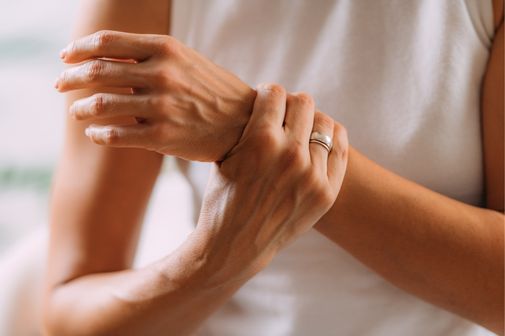
Most elbow, wrist, hand, foot, and ankle problems can be treated without surgery. Common conditions such as tennis elbow, golfer’s elbow, carpal tunnel syndrome, trigger finger, de Quervain’s tendinitis, thumb arthritis, plantar fasciitis, Achilles tendinopathy, and ankle sprains usually improve with a combination of activity changes, bracing or splinting, targeted exercise, supportive footwear, and, when needed, image-guided injections or shockwave therapy. Each treatment has a specific role. Cortisone injections often provide fast relief, but for some tendon problems, such as tennis elbow, they can increase the chance of the pain returning. Progressive strengthening is the foundation for most tendon conditions, while splinting and precisely placed injections are central for nerve and tendon-sheath problems in the wrist and hand. Regenerative treatments such as platelet-rich plasma (PRP) are reasonable options for selected patients, but the evidence varies by condition. Surgery is needed for some problems, such as severe or worsening nerve compression, complete tendon ruptures, unstable fractures, and advanced arthritis that does not respond to conservative care. An accurate diagnosis of the specific structure causing your pain is what determines which treatment fits.
Pain in the elbow, wrist, hand, foot, and ankle most often comes from tendons, nerves, ligaments, or small joints that have been overloaded or have worn over time. Non-surgical treatment is the first-line approach for nearly all of these conditions. Tendon problems such as tennis elbow, golfer’s elbow, plantar fasciitis, and Achilles tendinopathy respond best to a gradual, progressive loading program combined with activity changes and, for the foot, proper footwear and supports. In a randomized trial of tennis elbow, a cortisone injection improved pain at four weeks but led to worse results and more than four times the recurrence rate at one year compared with a placebo injection. Carpal tunnel syndrome usually responds to night splinting and, when needed, a cortisone injection, with ultrasound-guided injections showing the best short-term results. Trigger finger and de Quervain’s tendinitis often resolve with splinting and a single cortisone injection into the tendon sheath. Shockwave therapy is an option for stubborn plantar fasciitis, tennis elbow, and Achilles pain.
The elbow, wrist, hand, foot, and ankle share a common feature: they contain many small tendons, ligaments, nerves, and joints packed into a compact space, and they handle repetitive loads every day. Gripping, typing, lifting, walking, and running place stress on the same structures thousands of times. When the load exceeds what a tendon or ligament can tolerate, or when a nerve is squeezed in a narrow passage, pain develops.
Most conditions in these areas fall into a few categories. Tendinopathy is irritation and degeneration of a tendon from repeated overload, such as tennis elbow or Achilles tendinopathy. Tendon-sheath problems occur when a tendon cannot glide smoothly through its tunnel, as in trigger finger and de Quervain’s tendinitis. Nerve compression occurs when a nerve is squeezed, as in carpal tunnel syndrome or a Morton’s neuroma in the foot. Ligament injuries, such as ankle sprains, affect joint stability. Arthritis can affect small joints such as the base of the thumb, the finger joints, and the ankle.
Understanding which category your pain falls into explains why treatment differs. Tendinopathy responds to gradual loading that helps the tendon adapt. Tendon-sheath and nerve problems respond to rest, splinting, and reducing swelling in a tight space. Ligament injuries respond to protection followed by balance and strength training. Arthritis responds to joint protection, strengthening, bracing, and targeted injections.
Elbow. Tennis elbow (pain on the outside of the elbow) and golfer’s elbow (pain on the inside) are tendon overload conditions caused by repetitive gripping and wrist movement. Treatment includes activity changes, a forearm counterforce strap or wrist brace, and a progressive strengthening program for the forearm muscles. Most cases improve within several months. Shockwave therapy and PRP are options for pain that persists despite rehabilitation. Elbow bursitis, a swelling at the tip of the elbow, usually settles with padding and avoiding pressure, while cubital tunnel syndrome, irritation of the ulnar nerve, often improves with avoiding prolonged elbow bending and night splinting. In some cases, hydrodissection of the ulnar nerve can be beneficial.
Wrist. Carpal tunnel syndrome causes numbness, tingling, and pain in the thumb, index, and middle fingers, often worse at night. First-line treatment is a wrist splint worn at night to keep the wrist straight, combined with changes to repetitive or forceful hand use. An injection of D5W into the carpal tunnel can relieve symptoms, and ultrasound guidance improves accuracy. De Quervain’s tendinitis, which causes pain along the thumb side of the wrist, usually responds to a thumb splint and a cortisone injection into the tendon sheath.
Hand. Trigger finger, in which a finger catches or locks when bending, is caused by a thickened tendon sheath. Splinting and a cortisone injection resolve many cases. Arthritis at the base of the thumb causes pain with pinching and gripping and is managed with a thumb splint, hand therapy, adaptive tools, and injections when needed. Finger joint arthritis is managed with activity changes, exercise, and joint protection.
Foot. Plantar fasciitis causes heel pain that is worst with the first steps in the morning. Treatment includes calf and plantar fascia stretching, supportive shoes, heel cups or orthotics, night splints, and activity changes. Most people improve within several months. Shockwave therapy and injections are options for persistent cases. Prolotherapy has also been found to be beneficial. These injections involve the use of a concentrated dextrose solution to strengthen the plantar fascia. Morton’s neuroma, a pinched nerve between the toes, often improves with wider shoes, a metatarsal pad, and sometimes an injection.
Ankle. Achilles tendinopathy causes pain and stiffness in the tendon above the heel and is treated primarily with a progressive calf-strengthening program, temporary activity changes, and supportive footwear. Ankle sprains are treated with early protection followed by balance, strength, and agility training to prevent repeated sprains. Ankle arthritis is managed with bracing, supportive shoes, activity changes, and injections. Posterior tibial tendon dysfunction, which can cause a gradually flattening arch, is managed with orthotics, bracing, and strengthening.
Activity modification. Reducing or changing the activities that overload the painful structure gives it time to settle without complete rest, which can weaken muscles and tendons.
Bracing, splinting, and footwear. Wrist and thumb splints, elbow straps, night splints for the foot, ankle braces, supportive shoes, and orthotics reduce strain on irritated tissues and support healing.
Progressive exercise and therapy. Tendons adapt to gradually increasing load. Structured strengthening programs, including slow, controlled loading exercises, are the foundation of treatment for tennis elbow, golfer’s elbow, plantar fasciitis, and Achilles tendinopathy. Balance and strength training are essential after ankle sprains.
Cortisone injections. Low-dose cortisone reduces inflammation and swelling and is particularly effective for tendon-sheath and nerve compression problems such as trigger finger, de Quervain’s tendinitis, and carpal tunnel syndrome. For chronic tendon problems such as tennis elbow and Achilles tendinopathy, cortisone is used cautiously or avoided because it can weaken tendon tissue and may worsen long-term results.
Shockwave therapy. Focused acoustic energy waves stimulate blood flow and tissue repair. Shockwave is used for persistent plantar fasciitis, tennis elbow, Achilles tendinopathy, and calcific tendon problems, typically as a series of short sessions without needles or downtime.
Regenerative injections. PRP, made from your own blood, concentrates platelets that carry growth factors involved in tissue repair. It is used for selected patients with chronic tendon problems that have not improved with rehabilitation. Results vary by condition, and it works best as part of a full rehabilitation plan.
If you have elbow, wrist, hand, foot, or ankle pain that has lasted more than a few weeks, keeps returning, wakes you at night, or limits work, exercise, or daily tasks, you should be evaluated. This is especially true if you have numbness or tingling, if cortisone injections have helped only briefly, or if you have been told surgery is your only option.
At our practice, Dr. A. Dianne Obayan evaluates these conditions with a detailed history, a hands-on examination of strength, motion, and sensation, and diagnostic ultrasound to see tendons, ligaments, and nerves directly. Ultrasound also allows injections to be placed precisely. Identifying the specific structure causing your pain determines whether your plan should focus on rehabilitation, bracing, shockwave therapy, image-guided injections, regenerative treatment such as PRP, or a surgical referral.
Be cautious about delaying care if you have constant numbness, weakness, or muscle wasting in the hand, a sudden pop followed by weakness in the elbow or heel, an ankle that keeps giving way, or significant swelling and deformity after an injury. These signs can indicate nerve damage, a tendon rupture, ligament instability, or a fracture that needs prompt evaluation.
Your safety comes first. Seek urgent care if you have a sudden pop and inability to push off with your foot or bend your elbow, a limb that is deformed after an injury, inability to bear weight, a joint that becomes hot, red, and swollen with fever, sudden severe numbness or weakness in the hand or foot, or calf pain and swelling, which can indicate a blood clot.
People with diabetes should have any foot wound, color change, or new numbness checked promptly, since nerve and circulation problems can hide serious injuries. Injections in the hand, wrist, elbow, foot, and ankle are generally safe when performed precisely. Temporary soreness is common, while infection, bleeding, tendon weakening, and nerve irritation are uncommon. Cortisone can temporarily raise blood sugar and lighten the skin at the injection site, and repeated cortisone injections near weight-bearing tendons such as the Achilles are generally avoided.
If you take blood-thinning medication, have diabetes, have a bleeding disorder, or have an active infection, tell your provider before any injection. We work collaboratively with your existing healthcare team to ensure safe, coordinated care. Do not discontinue prescribed medications without medical guidance.
Ready to talk it through? After you’ve reviewed more about our ANEW approach, the best first step is to schedule a consultation so we can understand your symptoms, goals, medical history, and prior treatment experience.
During your consultation process, we may review imaging, discuss prior care, evaluate your movement and function, and determine whether you may be a candidate for ANEW’s non-surgical restoration options.
This educational content is not a substitute for personal medical care.
Medically Reviewed By: Dr. A. Dianne Obayan, M.D. P.T.
Let's build your path to recovery - together.

Advanced regenerative care for lasting results.
ANEW Regenerative Medicine Specialists
28544 Orchard Lake Rd,
Farmington Hills, MI 48334
Tel: 248-861-2639
Email: care@anewregen.com