
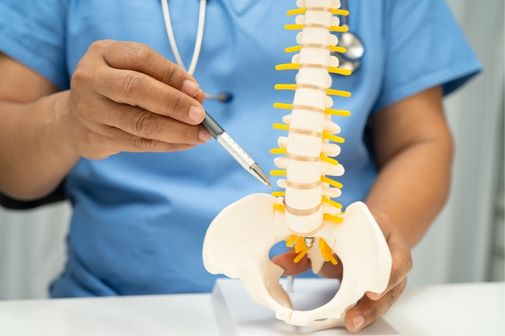
Yes. Most people with degenerative disc disease can be treated effectively without surgery. Despite its name, degenerative disc disease is not truly a disease but a description of the age-related changes that happen to the discs of the spine, and these changes are extremely common in people with no back pain at all. When the discs do contribute to pain, a combination of staying active, a structured exercise and physical therapy program, attention to body weight, sleep, and posture, short-term medications, and targeted image-guided injections helps most patients reduce pain and return to normal activities. Research comparing spinal fusion with structured rehabilitation for chronic disc-related back pain has not shown a clear advantage for surgery in most patients. Regenerative treatments such as platelet-rich plasma (PRP) are being studied for disc pain, but the evidence is still early. Surgery is the right choice in specific situations, including nerve compression causing progressive weakness, loss of bladder or bowel control, spinal instability, or severe nerve pain that does not improve after a full course of non-surgical care.
The intervertebral discs are cushions between the bones of the spine that gradually lose water, height, and resilience with age. These changes, often labeled degenerative disc disease on an MRI report, are found in about 37% of people without back pain at age 20 and in 96% of people without back pain by age 80, so an MRI finding alone does not explain why someone has pain. Back pain related to disc degeneration can come from the disc itself, the small facet joints that take on more load as discs thin, tight or weak supporting muscles, or nerves that become irritated or compressed. Exercise is the foundation of treatment, and a large review of 249 trials found that exercise reduces pain in chronic low back pain compared with no treatment. Other non-surgical options include physical therapy, weight management, short-term anti-inflammatory medications, epidural steroid injections for nerve pain, facet joint injections and radiofrequency ablation for facet pain, and in selected patients, regenerative injections. Early studies of PRP injected into painful discs report improvement. PRP for disc pain remains an emerging option. Surgery should be considered for progressive weakness, loss of bladder or bowel control, spinal instability, or disabling nerve pain that persists despite good non-surgical care.
Each disc in the spine has a tough outer ring, called the annulus, and a soft, gel-like center, called the nucleus. Healthy discs act as shock absorbers and allow the spine to bend and twist. Starting in early adulthood, the discs gradually lose water content. As they dry out, they become thinner and less able to absorb load, and small tears can develop in the outer ring. These changes are a normal part of aging, much like gray hair or wrinkles, and they happen to nearly everyone to some degree.
Disc degeneration can contribute to pain in several ways. A disc with tears in its outer ring can become a pain source itself, often called discogenic pain, which is usually felt as a deep ache in the low back or neck that worsens with sitting, bending, or lifting. As discs lose height, more load shifts to the facet joints at the back of the spine, which can become arthritic and painful. Bulging discs and bone spurs can narrow the spaces where nerves exit the spine, causing pain, numbness, or tingling that travels into the leg or arm. The muscles around the spine may also tighten or weaken in response, adding to the pain.
Understanding this explains why treatment is not one-size-fits-all. The goal is to identify which structure is generating your pain—the disc, the facet joints, the nerves, or the muscles—and to treat that source while improving the strength, flexibility, and movement patterns that protect the spine.
One of the most important facts about degenerative disc disease is how common it is in people who feel fine. A large review of imaging studies in people without back pain found that disc degeneration was present in 37% of 20-year-olds and 96% of 80-year-olds. Disc bulges were found in 30% of 20-year-olds and 84% of 80-year-olds. The authors concluded that many of these findings are part of normal aging and should be interpreted in the context of each patient’s symptoms.
This means that a report describing “degenerative disc disease,” “disc bulges,” or “disc desiccation” does not by itself mean those discs are causing your pain or that surgery is needed. A careful history and physical examination are needed to connect your symptoms to a specific source. In some cases, diagnostic injections that temporarily numb a specific structure help confirm where the pain is coming from.
Staying active. Bed rest and prolonged inactivity tend to make back pain worse. Continuing everyday activities as much as pain allows, with gradual increases, supports recovery and helps prevent deconditioning.
Exercise and physical therapy. A structured program that strengthens the deep trunk muscles, hips, and legs, improves flexibility, and retrains movement patterns is the foundation of care. Specific approaches vary, and the best program is one that is matched to your symptoms and that you can continue long term.
Weight, sleep, and smoking. Excess body weight increases the load on the discs and facet joints. Poor sleep amplifies pain sensitivity. Smoking reduces blood flow to the tissues around the discs and is linked to faster disc degeneration. Addressing these factors supports every other treatment.
Medications. Anti-inflammatory medications and, in some cases, short courses of muscle relaxants can help during flares. Some patients with nerve-related pain benefit from medications that calm nerve signaling.
Epidural steroid injections. When a disc bulge or narrowing irritates a nerve and causes pain down the leg or arm, an image-guided epidural steroid injection can reduce inflammation around the nerve. The relief is often temporary, but it can create a window for rehabilitation to take effect.
Facet joint injections and radiofrequency ablation. When the facet joints are the main pain source, image-guided diagnostic blocks can confirm the diagnosis, and radiofrequency ablation, which uses heat to interrupt the small nerves carrying pain signals from the joint, can provide longer-lasting relief. Recent research has shown that radiofrequency ablation may help facet-mediated back pain, but may also be to some weakness and atrophy of the multifidi muscles. Therefore, these treatments are to be used in selected patients.
Regenerative injections. PRP and other biologic treatments are being studied for disc pain and for the facet and sacroiliac joints. Early results are encouraging for some patients, but the evidence is still developing, and these treatments are best considered for carefully selected patients after a thorough evaluation.
Surgery is the right choice in some situations. Emergency evaluation is needed for new loss of bladder or bowel control or numbness in the groin and inner thighs, which can signal severe nerve compression. Surgery should also be considered promptly for progressive leg or arm weakness, for spinal instability in which one vertebra slips significantly on another, and for fractures, infections, or tumors of the spine.
For nerve pain caused by a disc herniation or spinal narrowing, surgery may be reasonable when severe pain persists for several weeks to months despite a full course of non-surgical care, or when walking is severely limited by leg pain from spinal stenosis. Surgery is generally less predictable for back pain from disc degeneration alone, without nerve compression or instability, which is why non-surgical care is preferred in that situation.
If you have been told you have degenerative disc disease and are worried that surgery is inevitable, or if back or neck pain has lasted more than a few weeks and is limiting work, sleep, exercise, or daily activities, you should be evaluated. This is especially true if your pain travels into an arm or leg, if previous treatments have provided only short-term relief, or if your imaging results and symptoms do not seem to match.
At our practice, Dr. A. Dianne Obayan, who is triple board-certified in Physical Medicine and Rehabilitation, Pain Medicine, and Sports Medicine, evaluates spine pain with a detailed history, a hands-on examination of movement, strength, reflexes, and sensation, and a careful review of your imaging. The goal is to identify whether your pain is coming from a disc, the facet joints, a nerve, the sacroiliac joint, or the surrounding muscles, and to build a plan that may include rehabilitation, image-guided injections, and when appropriate, regenerative treatment. When the findings point to a problem that needs surgery, we tell you so and help coordinate a referral.
Be cautious about relying on non-surgical care alone if you have worsening weakness, numbness in the groin, changes in bladder or bowel control, unexplained weight loss, fever, a history of cancer, or back pain after a significant fall or injury. These signs can indicate a condition that needs prompt imaging or surgical evaluation. Regenerative and non-surgical approaches are not a substitute for surgery when a nerve is being damaged or the spine is unstable.
Your safety comes first. Seek emergency care for new loss of bladder or bowel control, numbness in the groin or inner thighs, sudden or rapidly worsening weakness in an arm or leg, back pain with fever or chills, or severe back pain after a fall or accident. Back pain with unexplained weight loss, a history of cancer, or pain that is worse at night and not relieved by rest also needs prompt evaluation.
Spine injections are generally safe when performed under image guidance by an experienced physician. Temporary soreness at the injection site and a brief increase in pain are common. Less common risks include infection, bleeding, headache, and nerve irritation. Steroid injections can temporarily raise blood sugar in people with diabetes.
Anti-inflammatory medications can affect the stomach, kidneys, and blood pressure with regular use. If you take blood-thinning medication, have diabetes, have a bleeding disorder, or have an active infection, tell your provider before any injection. We work collaboratively with your existing healthcare team to ensure safe, coordinated care. Do not discontinue prescribed medications without medical guidance.
Ready to talk it through? After you’ve reviewed more about our ANEW approach, the best first step is to schedule a consultation so we can understand your symptoms, goals, medical history, and prior treatment experience.
During your consultation process, we may review imaging, discuss prior care, evaluate your movement and function, and determine whether you may be a candidate for ANEW’s non-surgical restoration options.
This educational content is not a substitute for personal medical care.
Medically Reviewed By: Dr. A. Dianne Obayan, M.D. P.T.
Let's build your path to recovery - together.

Advanced regenerative care for lasting results.
ANEW Regenerative Medicine Specialists
28544 Orchard Lake Rd,
Farmington Hills, MI 48334
Tel: 248-861-2639
Email: care@anewregen.com