
Yes. Many herniated discs heal on their own, and most people with a herniated disc improve without surgery. When the soft center of a disc pushes out through its tough outer ring, the body often recognizes the displaced material as foreign and gradually breaks it down and reabsorbs it. A 2020 review of 38 studies found that nearly two-thirds of herniated discs treated without surgery shrank or disappeared on follow-up imaging. Surprisingly, the larger herniations that break further out of the disc are the most likely to regress. Symptoms often improve even sooner, as the inflammation around the irritated nerve settles, and most people with sciatica from a disc herniation improve substantially within weeks to a few months. Surgery can relieve leg pain faster for some patients, but in a large trial, outcomes one year later were similar whether patients had early surgery or continued with non-surgical care. Surgery is still necessary in some situations, including loss of bladder or bowel control, progressive leg weakness, or severe pain that does not improve after a reasonable period of non-surgical treatment.
A herniated disc occurs when the gel-like center of a spinal disc pushes through a tear in its outer ring and can irritate or compress a nearby nerve, causing back pain and pain, numbness, or tingling that travels into the leg (sciatica) or arm. The body can break down and reabsorb herniated disc material through an immune and inflammatory response, which is why many herniations shrink over time. In a review of studies that followed patients with repeat imaging, regression occurred in about 96% of sequestered herniations, in which a fragment has broken free, 70% of extrusions, 41% of protrusions, and 13% of bulges. Regression typically takes months, and symptoms often improve before imaging changes are seen. In a randomized trial of 283 patients with severe sciatica, early surgery relieved leg pain faster, but about 95% of patients in both groups reported recovery at one year, and most patients treated without surgery never needed an operation. Non-surgical care includes staying active, physical therapy, short-term medications, and image-guided epidural steroid injections, which provide modest short-term relief for leg pain. Surgery should be considered for loss of bladder or bowel control, progressive weakness, or disabling pain that persists despite several weeks to months of good non-surgical care.
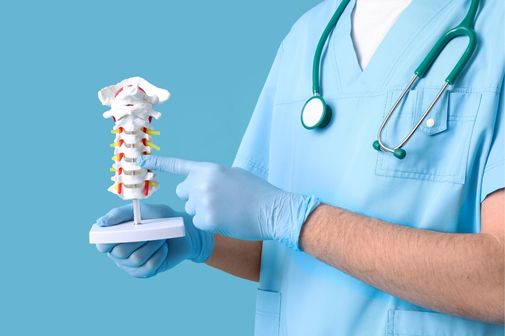
Each disc in the spine has a tough, fibrous outer ring called the annulus and a soft, gel-like center called the nucleus. When the outer ring weakens or tears, the nucleus can push outward. A bulge is a broad, mild outward expansion of the disc. A protrusion is a more focused push of disc material that remains contained by the outer ring. An extrusion occurs when disc material breaks through the outer ring, and a sequestration occurs when a fragment of that material separates completely from the disc.
A herniated disc causes pain in two main ways. The displaced material can press on a nearby nerve root, and the material itself releases inflammatory chemicals that irritate the nerve even without much pressure. This combination produces the sharp, shooting, or burning pain that travels down the leg in sciatica, or down the arm when the herniation is in the neck, often with numbness, tingling, or weakness in a specific pattern.
Understanding this explains why symptoms can improve even before the herniation shrinks. As the chemical inflammation around the nerve settles, pain often eases substantially, even while the disc material is still present on imaging.
Disc material that has pushed out of the disc is exposed to the body’s immune system for the first time. The body responds by sending immune cells and forming new small blood vessels around the herniation. Over time, these cells break down and absorb the displaced material, and the herniation shrinks. Water loss from the herniated tissue also contributes to its reduction in size.
This process explains a finding that surprises many patients: the larger herniations that break through the outer ring, extrusions and sequestrations, are more likely to regress than small, contained protrusions or bulges. The more the disc material is exposed to the immune system, the more strongly the body works to clear it.
Healing takes time. Measurable shrinkage is unlikely within the first six weeks and usually becomes apparent over several months. Symptoms, however, often begin to improve within the first several weeks as nerve inflammation settles. The outer ring of the disc itself heals slowly and may leave a scar, which is one reason staying active and strengthening the trunk and hips remain important after symptoms resolve.
A 2020 review combined 38 studies of 2,219 patients with herniated lumbar discs who were treated without surgery and had repeat imaging. Overall, about 63% of herniations regressed. The authors concluded that the likelihood of regression is high enough that it should be considered before choosing surgery, and suggested that surgery be considered for patients with severe symptoms and no improvement after about four months.
An earlier review that examined regression by herniation type found that 96% of sequestered herniations regressed, along with 70% of extrusions, 41% of protrusions, and 13% of bulges. Complete disappearance occurred in 43% of sequestered herniations and 15% of extrusions.
For patients with severe sciatica, a randomized trial published in the New England Journal of Medicine compared early surgery with prolonged non-surgical care in 283 patients whose leg pain had lasted six to twelve weeks. Patients who had early surgery experienced faster relief of leg pain and faster recovery. At one year, however, disability scores were similar, and about 95% of patients in both groups reported recovery. Of those assigned to non-surgical care, 39% eventually had surgery, which means more than 60% recovered without it.
Staying active. Bed rest is no longer recommended. Gentle walking and continuing daily activities as pain allows support recovery and prevent stiffness and weakness. Avoiding prolonged sitting, heavy lifting, and repeated bending in the early weeks reduces strain on the disc.
Physical therapy. A therapist can identify movements and positions that reduce leg pain, teach exercises that calm the irritated nerve, and gradually build strength and endurance in the trunk, hips, and legs. As symptoms improve, the program shifts toward preventing recurrence.
Medications. Anti-inflammatory medications can help during the first weeks. Medications that calm nerve signaling are sometimes used for persistent nerve pain.
Epidural steroid injections. An image-guided injection of steroid medication near the irritated nerve can reduce inflammation and leg pain. A Cochrane review found that these injections provide modest short-term relief of leg pain and disability, from two weeks to three months, but no added long-term benefit over placebo. For many patients, that short-term relief makes it easier to stay active and participate in rehabilitation while the disc heals.
Regenerative treatments. Some practices use injections of concentrated platelet products around irritated nerves as an alternative to steroids, or to support healing of the disc and surrounding tissues. These approaches are promising but still being studied, and they are best considered for selected patients after a thorough evaluation.
Emergency surgery may be needed for cauda equina syndrome, a rare condition in which a large herniation compresses the bundle of nerves at the bottom of the spinal canal. Warning signs include new loss of bladder or bowel control, numbness in the groin or inner thighs, and weakness in both legs. Surgery should also be considered promptly for leg weakness that is significant or getting worse, such as foot drop, in which the front of the foot cannot be lifted.
For patients without these warning signs, surgery is a reasonable option when severe leg pain persists despite a full course of non-surgical treatment, usually after several months. Surgery to remove the herniated material, called a microdiscectomy, generally relieves leg pain quickly, which may matter to patients who cannot work or function. The decision should balance faster relief against surgical risks and the high likelihood of improvement without surgery.
If you have back or neck pain with pain, numbness, or tingling that travels into a leg or arm, or if you have been told you have a herniated disc and are unsure whether you need surgery, you should be evaluated. An evaluation is especially worthwhile if pain is limiting work, sleep, or daily activities, or if symptoms have not improved after a few weeks.
At our practice, Dr. A. Dianne Obayan, who is triple board-certified in Physical Medicine and Rehabilitation, Pain Medicine, and Sports Medicine, evaluates herniated discs with a detailed history, a neurological examination of strength, reflexes, and sensation, and a review of your imaging. The goal is to confirm whether the herniation explains your symptoms, monitor for warning signs, and build a plan that may include rehabilitation, image-guided injections, and, when appropriate, regenerative treatment. When surgery is the better option, we tell you so and help coordinate a referral.
Be cautious about waiting if you have weakness that is getting worse, numbness in the groin, changes in bladder or bowel control, or pain with fever, unexplained weight loss, or a history of cancer. These situations need prompt evaluation. Non-surgical and regenerative approaches are not a substitute for surgery when a nerve is being progressively damaged.
Your safety comes first. Seek emergency care for new loss of bladder or bowel control, numbness in the groin, buttocks, or inner thighs, weakness in both legs, sudden or rapidly worsening weakness in a leg or arm, or back pain with fever or chills. Back pain after a significant fall or accident, or with unexplained weight loss or a history of cancer, also needs prompt evaluation.
Epidural and other spine injections are generally safe when performed under image guidance by an experienced physician. Temporary soreness and a brief increase in pain are common. Less common risks include infection, bleeding, headache, and nerve irritation, and serious complications are rare. Steroid injections can temporarily raise blood sugar in people with diabetes.
If you take blood-thinning medication, have diabetes, have a bleeding disorder, or have an active infection, tell your provider before any injection. We work collaboratively with your existing healthcare team to ensure safe, coordinated care. Do not discontinue prescribed medications without medical guidance.
Ready to talk it through? After you’ve reviewed more about our ANEW approach, the best first step is to schedule a consultation so we can understand your symptoms, goals, medical history, and prior treatment experience.
During your consultation process, we may review imaging, discuss prior care, evaluate your movement and function, and determine whether you may be a candidate for ANEW’s non-surgical restoration options.
This educational content is not a substitute for personal medical care.
Medically Reviewed By: Dr. A. Dianne Obayan, M.D. P.T.
Let's build your path to recovery - together.

Advanced regenerative care for lasting results.
ANEW Regenerative Medicine Specialists
28544 Orchard Lake Rd,
Farmington Hills, MI 48334
Tel: 248-861-2639
Email: care@anewregen.com