
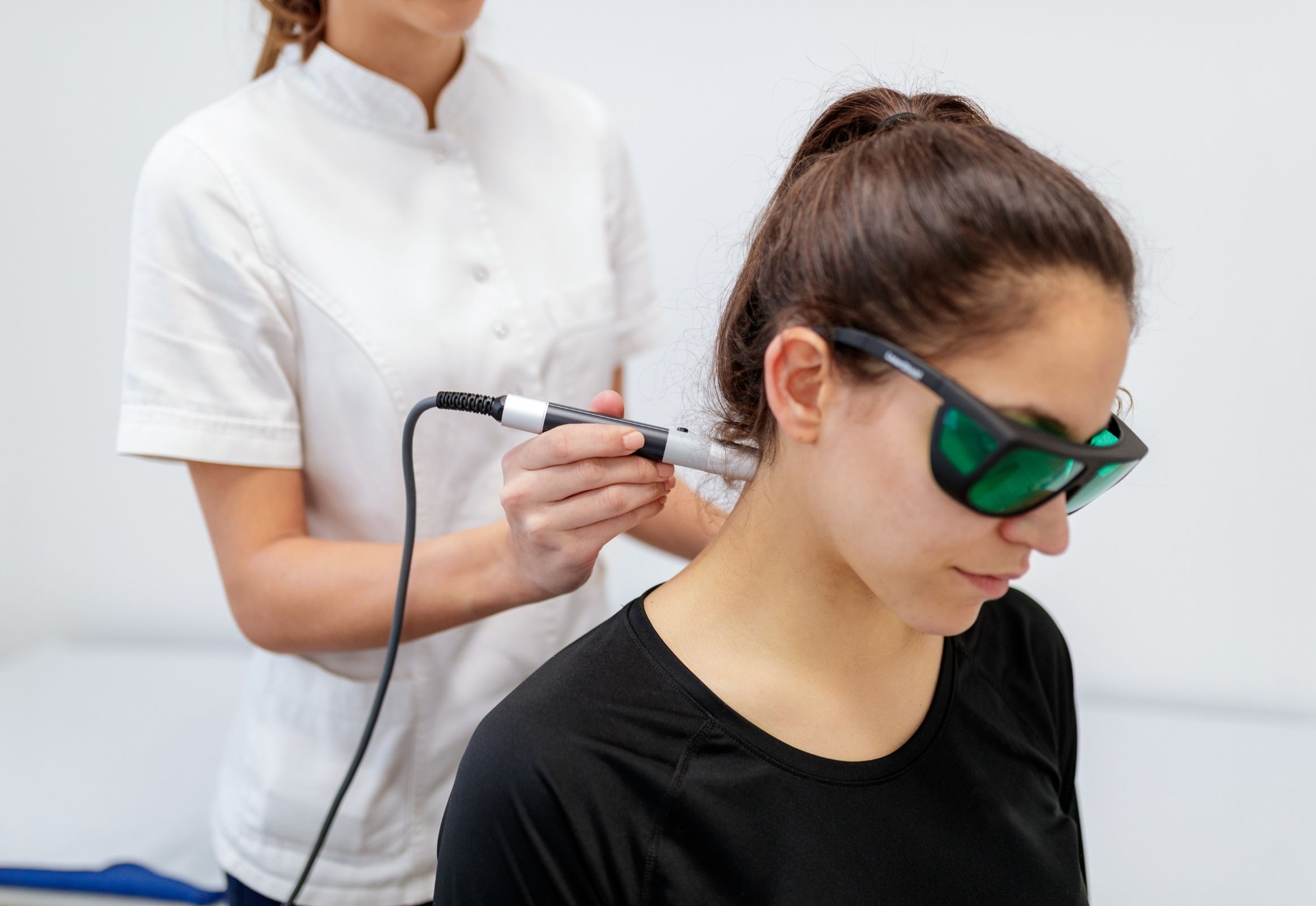
MLS laser therapy is a type of therapeutic laser treatment used to reduce pain, inflammation, and stiffness in muscles, tendons, and joints. MLS stands for Multiwave Locked System, a technology that combines two laser wavelengths, 808 nanometers and 905 nanometers, and fires them in a synchronized pattern, with one beam delivered continuously or in pulses and the other in short, high-peak pulses. The goal of combining the two is to address inflammation and pain at the same time while reaching tissues below the skin. Like other therapeutic lasers, MLS works through photobiomodulation: light energy is absorbed by cells, where it is thought to increase cellular energy production, improve local blood flow, and calm inflammatory and pain signaling. Treatments are painless, take only a few minutes, and require no needles or downtime. MLS devices are cleared by the FDA for the temporary relief of muscle and joint pain, stiffness, arthritis pain, and muscle spasm. Small randomized trials have reported benefits for neck pain, knee osteoarthritis, and low back pain, but the overall body of research is still limited, and MLS laser works best as part of a broader treatment plan rather than on its own.
MLS laser therapy is a high-powered therapeutic laser that combines an 808-nanometer wavelength with a 905-nanometer pulsed wavelength, synchronized so the two beams are delivered together. It is used for painful musculoskeletal conditions such as arthritis, tendon and ligament problems, muscle strains, and back and neck pain. The treatment works through photobiomodulation, meaning light energy changes how cells function rather than cutting or destroying tissue. Proposed effects include increased cellular energy production, reduced inflammation, improved circulation in small blood vessels, and reduced transmission of pain signals. The FDA has cleared the manufacturer’s MLS diode laser for the temporary relief of muscle and joint pain and stiffness, arthritis pain, and muscle spasm, for temporarily increasing local blood circulation, and for promoting muscle relaxation. In a randomized placebo-controlled trial of 75 people with chronic neck pain, MLS laser plus exercise reduced pain and disability more than a single-wavelength laser plus exercise or a placebo laser plus exercise. In knee osteoarthritis, MLS laser improved pain and function, and a double-blind trial in chronic low back pain found that MLS laser reduced pain more than a sham laser at one-month follow-up, although function and disability improved similarly in both groups. Most studies are small and use different treatment settings. MLS laser is generally safe when proper precautions are followed and is most useful as part of a plan that includes exercise and rehabilitation.
Therapeutic lasers are very different from surgical or cosmetic lasers. Rather than cutting, burning, or removing tissue, they deliver focused light at specific wavelengths, usually in the red and near-infrared range, that passes through the skin and is absorbed by cells in the underlying tissues. This effect is called photobiomodulation.
Inside cells, the absorbed light is thought to act mainly on the mitochondria, the structures that produce the cell’s energy. Laboratory research suggests this can increase energy production, influence signaling molecules involved in inflammation, and release nitric oxide, which helps small blood vessels widen and improves local circulation. Light therapy may also reduce the activity of nerve fibers that transmit pain and decrease swelling. Together, these effects are believed to reduce pain and inflammation and support the body’s tissue repair process.
Understanding this also explains the limits of laser therapy. It may calm inflammation and pain and create better conditions for healing, but it does not rebuild worn cartilage, repair a complete tendon tear, or correct the mechanical problems that often drive musculoskeletal pain. This is why laser therapy works best when combined with strengthening, movement retraining, and other treatments.
Two synchronized wavelengths. Most therapeutic lasers use a single wavelength. MLS combines an 808-nanometer beam with a 905-nanometer pulsed beam and synchronizes their emission. The 808-nanometer wavelength is associated with anti-inflammatory and anti-swelling effects, while the 905-nanometer pulsed wavelength, delivered in very short high-peak pulses, is associated with pain relief and deeper penetration.
Higher power. MLS systems deliver more power than traditional low-level or “cold” lasers, which allows energy to reach deeper tissues in a shorter treatment time. Because of this higher power, MLS treatments are performed by trained staff with appropriate safety precautions.
Short treatment sessions. Each treatment usually takes a few minutes per area. Patients typically feel little or nothing, or a mild sense of warmth. There are no needles, no medications, and no recovery time, so normal activities can be resumed right away.
These features are the reason MLS is described as different from single-wavelength lasers. However, laser devices vary widely in wavelength, power, pulse pattern, and treatment settings, and research on one device or protocol cannot automatically be applied to another.
MLS laser is used for a range of painful musculoskeletal conditions, including osteoarthritis of the knee, hip, hand, and other joints; tendon problems such as tennis elbow, rotator cuff tendinopathy, Achilles tendinopathy, and plantar fasciitis; ligament sprains and muscle strains; neck and back pain; and pain and swelling after injury. It is often combined with physical therapy, exercise, and other regenerative or rehabilitative treatments.
Laser therapy is sometimes also offered for nerve-related pain, including neuropathy.
Several randomized trials have studied MLS laser specifically. In a placebo-controlled trial of 75 people with chronic neck pain, participants were assigned to MLS laser plus exercise, a single-wavelength laser plus exercise, or a placebo laser plus exercise. All three groups improved, but after six weeks, the MLS group had the greatest reductions in pain and neck disability. The authors concluded that MLS laser combined with exercise was more effective than exercise with the other laser or with placebo.
In knee osteoarthritis, a study comparing different laser methods found that all active laser treatments significantly improved knee pain and function, with the largest improvement seen in a two-wavelength MLS group treated at a higher energy dose. In a 2024 double-blind, placebo-controlled trial of people with chronic non-specific low back pain, both MLS laser and a sham laser reduced pain and disability by the end of treatment. One month later, the MLS group reported significantly lower pain than the sham group, but there was no difference in function or disability.
These studies are encouraging but relatively small, and they used different treatment settings and schedules. The low back pain trial in particular shows that some of the improvement seen during laser treatment can occur with a sham device as well, which is why well-designed, placebo-controlled studies are important. Larger studies with longer follow-up are still needed to define which conditions respond best and which treatment settings are most effective.
Before treatment, the area is assessed and the laser settings are selected based on the condition and the depth of the tissue being treated. Both the patient and the clinician wear protective eyewear. The laser head is held over the treatment area, sometimes in a fixed position and sometimes moved across the areas by hand or automatically with the robot component of the MLS laser. Most people feel nothing or a mild warmth.
Treatment plans commonly involve a series of sessions over several weeks, with the number depending on the condition, how long it has been present, and how the person responds. Some people notice improvement after a few sessions, while others need more. Tracking pain and function over the course of treatment helps determine whether laser therapy is helping and whether to continue.
If you have joint, tendon, muscle, or back or neck pain that has not improved enough with rest, exercise, or medication, or if you are looking for a non-invasive, drug-free option to add to your treatment plan, an evaluation can help determine whether MLS laser therapy is a reasonable choice for you.
At our practice, Dr. A. Dianne Obayan evaluates each patient to identify the specific source of pain before recommending treatment. When MLS laser therapy is appropriate, it is typically combined with rehabilitation and, when indicated, other regenerative treatments such as platelet-rich plasma. We discuss what laser therapy can and cannot do, how progress will be measured, and how it fits with the rest of your plan.
Laser therapy should not be applied over a known or suspected cancer, over the abdomen or low back during pregnancy, directly over the eyes, or over the thyroid gland. People who take medications that increase sensitivity to light, have areas of reduced sensation, or have tattoos or darker skin in the treatment area may need adjusted settings or extra monitoring. Be cautious about any program that promises to cure a condition with laser therapy alone or that requires a large prepaid package before any improvement has been assessed.
Your safety comes first. Seek urgent medical care for sudden severe pain or swelling, a joint that becomes hot, red, and swollen with fever, inability to bear weight after an injury, or new numbness or weakness in an arm or leg. These symptoms need evaluation rather than laser treatment.
MLS laser therapy is generally safe when performed with proper precautions. Protective eyewear is required for everyone in the treatment room, because laser light can damage the eyes. Because MLS is a higher-power laser, the skin should be monitored for excessive warmth, especially in people with numbness from neuropathy who may not feel heat normally. Report any redness, blistering, or unusual discomfort during or after treatment.
Laser therapy does not replace evaluation of the cause of pain, prescribed medications, or rehabilitation. Do not stop or change medications without medical guidance. We work collaboratively with your existing healthcare team to ensure safe, coordinated care.
Ready to talk it through? After you’ve reviewed more about our ANEW approach, the best first step is to schedule a consultation so we can understand your symptoms, goals, medical history, and prior treatment experience.
During your consultation process, we may review imaging, discuss prior care, evaluate your movement and function, and determine whether you may be a candidate for ANEW’s non-surgical restoration options.
This educational content is not a substitute for personal medical care.
Medically Reviewed By: Dr. A. Dianne Obayan, M.D. P.T.
Let's build your path to recovery - together.

Advanced regenerative care for lasting results.
ANEW Regenerative Medicine Specialists
28544 Orchard Lake Rd,
Farmington Hills, MI 48334
Tel: 248-861-2639
Email: care@anewregen.com