
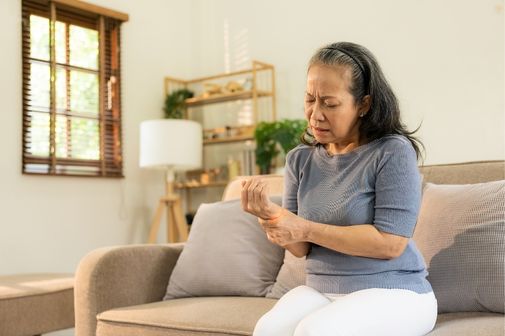
Neuropathy symptoms can be frightening and frustrating. Patients may describe burning, tingling, pins and needles, numbness, coldness, tightness, heaviness, or the feeling of walking with socks on even when barefoot. Some patients lose confidence on stairs, avoid walking, sleep poorly, or worry about falling.
Many patients are offered medication to reduce nerve pain. Medication may help, but it does not always address the whole problem: nerve irritation, circulation, metabolic health, balance, muscle weakness, gait, or focal nerve entrapment.
Not every burning or numb foot is the same problem. Symptoms may come from peripheral neuropathy, diabetic or prediabetic nerve changes, vitamin deficiency, thyroid disease, kidney disease, chemotherapy, medication effects, spine-related nerve compression, or a focal nerve entrapment. Some patients have more than one contributor.
Physician-led evaluation: Review of symptoms, medical history, medications, prior testing, and pattern of nerve involvement.
Sensory and functional assessment: Evaluation of sensation, strength, reflexes, gait, balance, and fall risk.
Metabolic review: Blood sugar, vitamin, thyroid, inflammatory, and other contributors may be reviewed or tested when appropriate.
Laser therapy: Used as a supportive non-surgical tool for selected patients to support comfort, circulation, local tissue response, and nerve-related symptoms.
Rehabilitation and balance training: Strength, gait, mobility, and fall-risk reduction help patients move with more confidence.
Targeted nerve procedures: When a focal nerve entrapment or localized nerve irritation is suspected, ultrasound-guided options may be considered.
MLS laser therapy is one tool ANEW may use for selected neuropathy or nerve-related symptoms. Laser therapy should not be described as a cure for neuropathy. It is best presented as a supportive therapy that may help with pain modulation, circulation, tissue response, and comfort while the broader plan addresses the underlying contributors and functional impact.
As ANEW advances its laser platform over time, the goal is to continue improving the quality, depth, and precision of supportive nerve and musculoskeletal care while keeping expectations responsible and individualized.
Some nerve symptoms come from a nerve being irritated or compressed as it passes through tight fascia, scar tissue, or an anatomic tunnel. Nerve hydrodissection is an ultrasound-guided procedure in which fluid is carefully placed around the nerve to gently separate it from surrounding tissue. The goal is to reduce mechanical pressure or irritation, improve nerve glide, and support a better local environment for nerve comfort and function.
For selected patients, ANEW may also consider perineural injection therapy. This physician-performed technique uses very small amounts of a dilute dextrose solution, commonly D5W, placed near irritated superficial or peripheral nerves. The goal is to calm nerve irritation and support the local environment around the nerve. It is not a cure for all neuropathy, but it may be considered when the evaluation suggests localized nerve irritation, entrapment, or neurogenic pain.
Seek urgent medical care for sudden weakness, new loss of bladder or bowel control, rapidly worsening numbness, a new foot wound or ulcer, signs of infection, severe new back or leg pain, or symptoms that feel sudden or stroke-like.
Selected research/resource links: These links are provided for patients who want to explore the research behind selected non-surgical, regenerative, rehabilitation, and recovery strategies. They are educational only and do not guarantee any individual result.
Ready to talk it through? After you’ve reviewed more about our ANEW approach, the best first step is to schedule a consultation so we can understand your symptoms, goals, medical history, and prior treatment experience.
During your consultation process, we may review imaging, discuss prior care, evaluate your movement and function, and determine whether you may be a candidate for ANEW’s non-surgical restoration options.
This educational content is not a substitute for personal medical care.
Medically Reviewed By: Dr. A. Dianne Obayan, M.D. P.T.
Let's build your path to recovery - together.

Advanced regenerative care for lasting results.
ANEW Regenerative Medicine Specialists
28544 Orchard Lake Rd,
Farmington Hills, MI 48334
Tel: 248-861-2639
Email: care@anewregen.com